Having had a successful year with changing how we teach Guided Reading to whole class teaching (read why and how here), it is time to consider how we will adapt our practice for the new curriculum which is coming into play in September. Using the new KS2 Reading objectives, which can be found here, we can adapt our approach from the AFs of APP to the themes which are displayed in the new curriculum.
Obviously, the government are keen for children to be able to retrieve information (the old AF2) and there is still a need for them to interpret feelings and emotions and to use these to predict (the old AF3). They wish for children to identify a writer's viewpoint (the old AF6) and to comment on the author's choice of language, structure and presentation (the old AFs 4 and 5). Interestingly, performance poetry now appears under the Reading heading in English and so that should be added into our Guided Reading units. There is no specific mention of historic relevance or cultural influence, although these could come under the author's viewpoint.
Therefore, over the summer, some adaptation will be needed in regards to the Read With RIC resources I made last year. I will likely remove the numbers as these only related to the APP grids and change the language as follows.
Old APP AFs
1) Decode
2) Retrieve
3) Interpret
4) Organise
5) Choice
6) Viewpoint
7) Culture
New Curriculum Suggestions
Retrieve
Interpret - including predictions
Choice - including language, structure and presentation
Viewpoint - including history and culture if appropriate
Perform - to make way for the Reading objectives of performance poetry and play scripts
Review - to include written recommendations, presentations and discussions as required in upper KS2
The RIC (Retrieve, Interpret, Choice) skills are still the most important and so the RIC starters which we have been using all year can remain, as can our character, RIC! With a few weeks still to think about these and discuss them with colleagues, keep your eyes peeled for the new RIC resources as the summer kicks in.
UPDATE AUGUST 2014: New Read with RIC resources for the 2014 Curriculum can be found HERE.
UPDATE OCTOBER 2014: How Whole-Class Guided Reading Lessons Work including how the school has adopted this across key stages 1 and 2.
To see all other blog posts about whole-class reading lessons, click here.

Musings of a UK Primary School Teacher
Sunday, 29 June 2014

Friday, 30 May 2014
Things to do in New York City
Background Information: We went for six nights to NYC in Easter 2014. That's when this blog post was first written. The sun shone for six of the days and we had one day of rain and snow. We stayed in the Broadway Plaza Hotel which is midtown and so was perfect for walking uptown or downtown. It was also right near a subway station which we used daily to get elsewhere. These lists come with the disclaimer that we didn't go everywhere in NYC. We booked a lot of this in advance and pack tonnes of trips into our seven days. These may not be the best things in NYC but they were the best things we experienced on a limited budget and from our midtown location.
Since then, we've returned to NYC twice. Once in August 2017 for 7 nights and then again at Christmas/New Years 2018 for 6 nights. We absolutely love the place and can't get enough of it. We've stayed loyal to the Broadway Plaza Hotel and can't recommend the place highly enough. I've added updates since 2014 in italics so you can track our thinking! Easter is still my favourite time to go - Summer was very hot and Christmas was so busy.
5 Free Things To Do in NYC
1) 9/11 Memorial - get your pass beforehand. Security is tight. Since 2014 this has now changed. You no longer need a pass to go to the memorial.
2) Walk the HighLine - an abandoned railway line which has been done-up so it's now a romantic half-mile walk through the city rooftops. This is still one of our favourite things to do.
3) Central Park ($2 map is worth it). Again, a firm favourite.
4) The Staten Island Ferry - good views of the Statue of Liberty and is free. Most people go around from arrivals to departures and get straight back on the next ferry back to Manhattan. Instead, we decided to take a walk around Staten Island and found the 9/11 memorial and some incredible views across the water.
5) Find the friends building (Grove Street in Greenwich Village) and the Ghostbusters firehouse (where Varick street and West Broadway cross). We always go back here - it's also a really lovely part of town.
5 Paid-For Activities (prices are approximate for each ticket)
1) WTC Tribute Center Tour (~$20) - people who were in the are on the day tell you their story and take you around the memorial. This was such a poignant and important addition to our visit to the memorial. You also get access to Tribute Center which has some exhibitions and donated items. I'm not sure this is still there now. Instead, go for a tour of the 9/11 Museum. Make sure you book in advance for the tour but it was so worth it.
2) Go to a sports game. We did Nets vs Knicks (basketball) and Yankees vs Red Sox (baseball). (~$50). Since 2014, we have see the Yankees play plenty of times as well as watching the NY Rangers ($150 per ticket for us - ouch!) and NYCFC soccer which is played at the Yankee Stadium. We loved the ice hockey but it was so expensive. Very interesting seeing a baseball stadium turned into a soccer stadium!
3) Watch a Broadway show. We did Wicked in limited view seats. ($75-200). We've seen a few shows since and always bought our tickets online in advance for approx $80 each. We've always found the booths more expensive and a gamble - we've never bought from them although I know lots of people have.
4) Go up to an observatory. We did Empire State and Rockefeller. The Rock was better. (~$30). Now One World Trade Center is completed you can also go up there. We always do The Rock as it's the best view in town but the view from One World is pretty awesome looking over the water.
5) Take the Liberty/Ellis Island Ferry. (~$20)
We'd also recommend, if you're there around Christmas, booking for the 8am slot at the Wollman's Ice Rink in Central Park.
5 Reasonable Eateries
1) Square Diner (Next to Chambers St and the Ghostbusters firehouse) - the only true diner we found. Food was amazing. We've been back time and again and also seen the diner on a few movies and Law and Order SVU.
2) Mustang Sally's (on 7th Ave and 20something st) - Great bar that serves delicious, cheap food. Sally's has now closed :( However, we can recommend the wings at Lansdowne Road on 10th/43rd.
3) Azalea (Next to Wicked theatre - the cast sometime drink and dine there) - Italian.
4) Serafina (in the meatpacking district on Gansevoort Street) - delicious pizza at a good price.
5) Ellen's Stardust Diner (Broadway and 51st) - the waitstaff sing while you eat amazing food. We go here every time...at least twice. Longest we've queued is an hour but that was at Christmas time. Brunch is great and has a shorter queue.
We would now also add Junior's for a cheesecake (ours is often at 1am!) and the Aria wine bar for food in Hell's Kitchen.
5 Things we saved for next time (or didn't have time to do!)
1) Katz Deli (from when Harry met Sally). We have since been - it's brilliant. Aim for just before or after normal lunch time for
2) Get off at Liberty and Ellis Island. This was very interesting but we've only done it once.
3) Walk the Brooklyn bridge. We walked all the way from the Broadway Plaza Hotel (midtown) to the start of the bridge, which is near a lot of SVU filming locations, to Brooklyn and back. Such a long walk but so many incredible views. We also bought some lovely artwork on the Manhattan side of the bridge.
4) WTC Museum (opening May 24th 2014). Highly recommended as I said above - book a tour if you can.
5) Get tickets to a TV filming (SNL, Letterman, Jimmy Fallon and GMA all film in NYC but you either get tickets beforehand or queue for ages) - go to the Rockefeller Center for information. We've still never done this!
We've still never seen the Knicks, despite having tickets and having to cancel because we postponed our holiday due to the drones.
P.S. I know this is NOTHING to do with Education but I had to put it somewhere! Also I will go through and add links at some point!
Since then, we've returned to NYC twice. Once in August 2017 for 7 nights and then again at Christmas/New Years 2018 for 6 nights. We absolutely love the place and can't get enough of it. We've stayed loyal to the Broadway Plaza Hotel and can't recommend the place highly enough. I've added updates since 2014 in italics so you can track our thinking! Easter is still my favourite time to go - Summer was very hot and Christmas was so busy.
5 Free Things To Do in NYC
1) 9/11 Memorial - get your pass beforehand. Security is tight. Since 2014 this has now changed. You no longer need a pass to go to the memorial.
2) Walk the HighLine - an abandoned railway line which has been done-up so it's now a romantic half-mile walk through the city rooftops. This is still one of our favourite things to do.
3) Central Park ($2 map is worth it). Again, a firm favourite.
4) The Staten Island Ferry - good views of the Statue of Liberty and is free. Most people go around from arrivals to departures and get straight back on the next ferry back to Manhattan. Instead, we decided to take a walk around Staten Island and found the 9/11 memorial and some incredible views across the water.
5) Find the friends building (Grove Street in Greenwich Village) and the Ghostbusters firehouse (where Varick street and West Broadway cross). We always go back here - it's also a really lovely part of town.
 |
| The view from the 9/11 memorial on Staten Island |
1) WTC Tribute Center Tour (~$20) - people who were in the are on the day tell you their story and take you around the memorial. This was such a poignant and important addition to our visit to the memorial. You also get access to Tribute Center which has some exhibitions and donated items. I'm not sure this is still there now. Instead, go for a tour of the 9/11 Museum. Make sure you book in advance for the tour but it was so worth it.
2) Go to a sports game. We did Nets vs Knicks (basketball) and Yankees vs Red Sox (baseball). (~$50). Since 2014, we have see the Yankees play plenty of times as well as watching the NY Rangers ($150 per ticket for us - ouch!) and NYCFC soccer which is played at the Yankee Stadium. We loved the ice hockey but it was so expensive. Very interesting seeing a baseball stadium turned into a soccer stadium!
3) Watch a Broadway show. We did Wicked in limited view seats. ($75-200). We've seen a few shows since and always bought our tickets online in advance for approx $80 each. We've always found the booths more expensive and a gamble - we've never bought from them although I know lots of people have.
4) Go up to an observatory. We did Empire State and Rockefeller. The Rock was better. (~$30). Now One World Trade Center is completed you can also go up there. We always do The Rock as it's the best view in town but the view from One World is pretty awesome looking over the water.
5) Take the Liberty/Ellis Island Ferry. (~$20)
We'd also recommend, if you're there around Christmas, booking for the 8am slot at the Wollman's Ice Rink in Central Park.
 |
| Yankee Stadium |
 |
| NY Rangers ice hockey at Madison Square Garden |
1) Square Diner (Next to Chambers St and the Ghostbusters firehouse) - the only true diner we found. Food was amazing. We've been back time and again and also seen the diner on a few movies and Law and Order SVU.
2) Mustang Sally's (on 7th Ave and 20something st) - Great bar that serves delicious, cheap food. Sally's has now closed :( However, we can recommend the wings at Lansdowne Road on 10th/43rd.
3) Azalea (Next to Wicked theatre - the cast sometime drink and dine there) - Italian.
4) Serafina (in the meatpacking district on Gansevoort Street) - delicious pizza at a good price.
5) Ellen's Stardust Diner (Broadway and 51st) - the waitstaff sing while you eat amazing food. We go here every time...at least twice. Longest we've queued is an hour but that was at Christmas time. Brunch is great and has a shorter queue.
We would now also add Junior's for a cheesecake (ours is often at 1am!) and the Aria wine bar for food in Hell's Kitchen.
 |
| Cheesecake at Junior's! |
1) Katz Deli (from when Harry met Sally). We have since been - it's brilliant. Aim for just before or after normal lunch time for
2) Get off at Liberty and Ellis Island. This was very interesting but we've only done it once.
3) Walk the Brooklyn bridge. We walked all the way from the Broadway Plaza Hotel (midtown) to the start of the bridge, which is near a lot of SVU filming locations, to Brooklyn and back. Such a long walk but so many incredible views. We also bought some lovely artwork on the Manhattan side of the bridge.
4) WTC Museum (opening May 24th 2014). Highly recommended as I said above - book a tour if you can.
5) Get tickets to a TV filming (SNL, Letterman, Jimmy Fallon and GMA all film in NYC but you either get tickets beforehand or queue for ages) - go to the Rockefeller Center for information. We've still never done this!
We've still never seen the Knicks, despite having tickets and having to cancel because we postponed our holiday due to the drones.
 |
| Brooklyn Bridge |
Tuesday, 27 May 2014
Very Late Thoughts on the Observation Game
Ever since OfSTEd, at a meeting with education bloggers,
confirmed that in most cases inspectors should not be giving judgements on individual
lessons, I have deliberated again and again about my thoughts on the
matter. I read the blogs of those in the
meeting, followed by Mike Cladingbowl’s Guardian article and then the blogs
of “mere mortal” teachers, those of us in the classroom day in and day
out. As I read each article, the same
question went through my head – is this a good idea or a bad idea?
When I had two PGCE students in March, I came to think about
observations again. Their university
required me to give four lesson judgements and a judgement per standard in two
separate reports. As I was sat there
giving them feedback from their first observation, I saw what I know I have
done in many of my own feedback sessions; they waited for the grading and
reacted to it.
I did it throughout my NQT observations. Good = nod and smile. Outstanding =
“YES”. Satisfactory = “ok” and head
down. Without the written feedback I
received from my mentor, I couldn’t remember my strengths or areas for
development. I remembered the
judgement. The judgement defined my
teaching…for six weeks before the next observation. Did the judgement change my
teaching? NO. Did the judgement change my confidence and pride? Yes – sometimes
for the better and sometimes for the worse.
The same was true for the students.
So, as I sat there giving meaningful and constructive
feedback to these lovely PGCE students so early in their teaching careers, my mind was made up about
observations. For them, observation
process would have been much more effective without an observation grade. That way, the focus would have been on
improving. Rather than aiming for a
“good” grade or an “outstanding” grade, my students would have focused solely
on what they needed to do to improve.
Their confidence wouldn’t have been shattered or their pride
overflowing. Their immediate next step
would have been what they remembered and worked towards, with my guidance.
My own performance management observations this year show
how fluid and unreliable the grades are.
In three lessons I’ve been given three different grades. They were fair grades and were exactly what I
would have given myself. So what grade
would my teaching overall be? Am I an “outstanding” teacher? Maybe good? Or
does my teaching require improvement? In
any lesson, I’d say the latter. Not in
the “used-to-be-satisfactory” sense of the word, but because there’s always
something I can do to improve. Removing
a grade from the observation process would mean the focus is shifted from
attainment to improvement.
If that were the case, I wonder if teachers would welcome
more observations. I know I certainly would. After all, it’s the negative
grades we’re all afraid of. I would love
to be observed by more-experienced teachers in a formative way, where the aim
for both of us is to make improvements.
That would encourage me to do what I always do rather than perform for
the grade. It would be an extra pair of
eyes in my classroom giving me an insight into my teaching as opposed to
someone making a judgement and checking off a tick list. Surely then, the more often someone comes into your classroom, the more rounded their view is of the teaching and learning that occurs. Therefore, when it comes to a time for making necessary judgements, as I understand there is still a need for, they will have the clearest view of your impact on learning.
I realise that removing judgements could be difficult when
it comes to performance management however there are schools which have done
this successfully and whose professional development programmes sound incredibly
formative and collaborative. They sound
like a pleasure rather than a chore and are solely aimed at improving teaching
and learning. I hope that OfSTEd’s
original announcement was to create that atmosphere in more schools, rather
than just shock and shake-up the education world.
Links:
Original post from the meeting with OfSTEd - http://headguruteacher.com/2014/02/20/meeting-ofsted/
Mike Cladingbowl's response - http://www.theguardian.com/teacher-network/teacher-blog/2014/feb/06/ofsted-future-school-inspection
A few other posts about observations -
Monday, 7 April 2014
There's No Education Like "Show" Education
...like no education I know!!!
The school production. In some teachers, it brings about a sense of dread and, in others, the fluttery butterflies of excitement. Thankfully for me, it's the latter. Questions like "What will we do this year?" and "Who will be cast as leads?" fly around both staff and children as decisions are made. First, a show is chosen or, where the talent is available, written, based on the cohort to perform it. How many strong singers have we got? How do they act as a whole? What are they into? What will suit them? It all has to be taken into account as the wrong show for the wrong group will cause a lot of extra problems. Next, the casting takes place with audition pieces handed out, practised and then performed for the chance of the key role. The excitement builds as teachers make the choices and then announce the parts, ensuring every child that wanted a part has one and that the characters are suited to them. It is then that the real hard work starts.
I recently read this post about performances in schools nowadays. It claims that, in some schools, the effort put into productions and the quality of them is waning in schools due to the increased focus on English and Maths in exercise books. While I agree that schools are incredibly focused on the academic side of education nowadays, I am glad that I've only worked in schools which put a great value on "show" education too.
I watched in awe in my first school as the impeccably talented Year 6 teacher expertly organised and directed a production each year. It is from him that I learned how and when to delegate, what to expect from children of that age group and the logistics of staging a show. He demonstrated patience in potentially stressful situations and, in his frustration, remained calm and collected. It was clear from the out-set that he put incredibly high value on this time of the year - he knew what a difference it would make to the children and how much it would be remembered and appreciated. This year, with his methods and manner in mind, my year team in a new school staged its first production.
To ease us in slowly, we decided to do a production I'd helped him with called The Pirates of the Curry Bean. It's full of cheesy songs, slapstick comedy and a multitude of one-liners. We chose to have two casts as there were so many talented children who auditioned. There were songs and lines to learn, blocking to practise, lights and sound to plan and props and costumes to source. The list went on: backdrops, accents, choreography, gestures, cues, positions etc. Despite there being "fun" elements to the process, putting on a production isn't for the faint-hearted! At first the rehearsals were out of school time but, as the showtime became closer, we made a brave decision. We went off timetable...for 3 whole weeks. No English, no maths, just rehearsals. In some schools this would be frowned upon or banned - schools which don't recognise the values of "show" education. For us, it was the best decision we could have made. Everything we were doing in those weeks had a clear purpose - we were making our show the best it could be, prioritising it above everything.
The show was a complete triumph with parents laughing out loud, applauding spontaneously and giving standing ovations. Last week saw the end of our production process; the props are cleared, costumes returned, scripts recycled - the curtain is down. It was VERY hard work but it was SO worth it because
The school production. In some teachers, it brings about a sense of dread and, in others, the fluttery butterflies of excitement. Thankfully for me, it's the latter. Questions like "What will we do this year?" and "Who will be cast as leads?" fly around both staff and children as decisions are made. First, a show is chosen or, where the talent is available, written, based on the cohort to perform it. How many strong singers have we got? How do they act as a whole? What are they into? What will suit them? It all has to be taken into account as the wrong show for the wrong group will cause a lot of extra problems. Next, the casting takes place with audition pieces handed out, practised and then performed for the chance of the key role. The excitement builds as teachers make the choices and then announce the parts, ensuring every child that wanted a part has one and that the characters are suited to them. It is then that the real hard work starts.
I recently read this post about performances in schools nowadays. It claims that, in some schools, the effort put into productions and the quality of them is waning in schools due to the increased focus on English and Maths in exercise books. While I agree that schools are incredibly focused on the academic side of education nowadays, I am glad that I've only worked in schools which put a great value on "show" education too.
I watched in awe in my first school as the impeccably talented Year 6 teacher expertly organised and directed a production each year. It is from him that I learned how and when to delegate, what to expect from children of that age group and the logistics of staging a show. He demonstrated patience in potentially stressful situations and, in his frustration, remained calm and collected. It was clear from the out-set that he put incredibly high value on this time of the year - he knew what a difference it would make to the children and how much it would be remembered and appreciated. This year, with his methods and manner in mind, my year team in a new school staged its first production.
To ease us in slowly, we decided to do a production I'd helped him with called The Pirates of the Curry Bean. It's full of cheesy songs, slapstick comedy and a multitude of one-liners. We chose to have two casts as there were so many talented children who auditioned. There were songs and lines to learn, blocking to practise, lights and sound to plan and props and costumes to source. The list went on: backdrops, accents, choreography, gestures, cues, positions etc. Despite there being "fun" elements to the process, putting on a production isn't for the faint-hearted! At first the rehearsals were out of school time but, as the showtime became closer, we made a brave decision. We went off timetable...for 3 whole weeks. No English, no maths, just rehearsals. In some schools this would be frowned upon or banned - schools which don't recognise the values of "show" education. For us, it was the best decision we could have made. Everything we were doing in those weeks had a clear purpose - we were making our show the best it could be, prioritising it above everything.
The show was a complete triumph with parents laughing out loud, applauding spontaneously and giving standing ovations. Last week saw the end of our production process; the props are cleared, costumes returned, scripts recycled - the curtain is down. It was VERY hard work but it was SO worth it because
- Children's confidence grew - they learned to speak with volume and clarity.
- The technicians learned how to use complex equipment and the importance of paying attention for cues. They also gained a huge sense of pride and achievement.
- The year group learned how to sing together and how to perform the songs.
- Some children learned choreographed dances of varying difficulty even through few of them had been on a stage before.
- A group of children became emergency stage hands and learned to follow many instructions and logically organise the props.
- We got the chance to explain a lot of funny one-liners. The children learned about many aspects of life through these, sometimes complex, puns.
- There was a REAL real-life context to everything they were doing - their parents were coming to see them. Read more about why this is important to me here.
- They learned about non-academic hard work and the potential employment opportunities in the arts.
- Some of them learned complex musical terms and features.
- They were able to achieve something great and feel an enormous sense of pride TOGETHER.
- They learned to encourage, empathise, communicate, revise, rehearse, apologise, forgive and the importance of all these skills in life.
- Many children realised the power of the "pause for comic effect" - a revelation for some.
- They got to see us out of the classroom and vice versa.
- They experienced patience like never before: rehearsing scenes over and over, waiting for others to rehearse, sitting straight and looking forward despite there being exciting things happening on stage.
- Hidden talents were revealed and celebrated.
I'm not sure the benefits listed above would have earned us an "outstanding" from our good friends at OfSTED had they turned up. Thankfully they didn't call but the question is - what would we have done if they had turned up? Drop everything and teach English and Maths? Or stand by the fact that there's no education like "show" education? I fear it would have been the former....how sad.
Thursday, 3 April 2014
NCIS Gibbs' Rules - Teacher Version
In the TV programme, NCIS: Naval Criminal Investigative
Service, the leader of the team, Leroy Jethro Gibbs (“Gibbs”), has a set of
rules which he’s lived and learned through his years as a marine. Here is my slightly altered version for the teaching profession. You can see the original Gibbs
Rules here and the version for the medical profession which inspired this post here.
Rule 1a: "Never let mischiefs sit together."
Rule 1b: "Never screw over your team."
Rule 2: "Always wear gloves to deal with nose bleeds."
Rule 3a: "Don't believe what you're told by a child.
Always double check.”
Rule 3b: "Never be unreachable…in fact always keep many
lines of communication open: email, text, call, fax, tweet etc."
Rule 4: "The best way to keep a secret? Keep it to
yourself. Second best? Tell one other person. But remember to choose
carefully…there is no third best.”
Rule 5: "You don't waste good staff room food – all
must go."
Rule 6: "Never say “please” when managing behaviour,
say “thank you”."
Rule 7: "Always make sure the real you is “in the
toilet” when you teach in role."
Rule 8: "Never take anything for granted, especially
not the sacred glue stick."
Rule 9: "Never go anywhere without a pen and a tissue."
Rule 10: "Getting personally involved is a part of the
job."
Rule 11: "The job is NEVER done."
Rule 12: "Never date a co-worker."
Rule 13: "Never, ever ask or involve the health and
safety officer."
Rule 14: "Bend the line when you have to (see Rule 13)."
Rule 15: "Always work as a team."
Rule 16: "Always have the upper hand – be at least one
step ahead of the kids."
Rule 18: "It's better to seek forgiveness than ask
permission (see Rule 13).”
Rule 22: "Never ever bother the IT technicians – just
turn it off and on, check the batteries and wiggle some wires because that’s
all they’ll do!"
Rule 23: "Never mess with a teacher’s morning cup of
tea…if you want to live."
Rule 27: "There are two ways to mark the books. First
way – tick and stamp. Second way – in
depth marking. Second way wins – see
Rule 11."
Rule 35: "Always watch out for the quiet ones.”
Rule 36: "If you feel like you are being played, you
probably are."
Rule 38: "Your class, your realm…except when you’re
being observed."
Rule 39: "There is no such thing as coincidence."
Rule 40: "If it seems like someone is out to get you,
they are."
Rule 42: "Never accept a forced apology from a child."
Rule 44: "First things first, hide all the dirty mugs
at the end of the day."
Rule 45: "Get the kids to clean up the mess they make –
otherwise you spend your whole life doing it."
Rule 51: "Sometimes you're wrong…but you were just
checking to see who was listening. “Well
done for spotting my deliberate mistake”!!"
Rule 69: "Never trust a head who doesn't trust their
deputy."
What rules would you add or change?
Sunday, 16 March 2014
Our Solutions to the Problems with Guided Reading
When I blogged about some resources I'd made to brand the reading AFs, I promised a blog post about how and why my year group had abandoned the traditional method for teaching reading. The idea came from my wonderful year leader, Rhoda, so she has written this to share our reasons and method.
If you'd have asked me 18 months ago about the most effective way
to teach reading across the primary phase I would have, without a doubt, talked
about Guided Reading. I had always taught reading through this approach, it was
just the way we did it. In fact, I was such an advocate that when I Ied English
across my school I encouraged other colleagues to do the same. I’ve now changed my mind.
It was a conversation with a teacher at a TeachMeet Sussex
meeting that got the cogs whirring. I heard him explain how his school had been
advised not to do Guided Reading Sessions during OfSTED as it would be
difficult to show progress which was above Requires Improvement. If that is the
case, why is this still our chosen method of teaching?
These are my main issues with Guided Reading:
1) The Independent Groups Problem.
The nature of the Guided Reading approach means that
although six children in my class receive focussed attention for the half hour
session, the remainder are left to work independently. I find myself thinking up tasks which “keep
them busy” rather than ones which will challenge and extend their learning as
these often require some input and support from me. All too often I see
children become disengaged with independent tasks as they are not pitched
correctly while I become a wasted resource sitting with six children in the
class. I don’t think I’m alone. In fact, this has been confirmed by OFSTED in
their report Reading for Pleasure and Purpose when they said that reading sessions
“took too little account of the needs of other groups in the class and the
tasks set for them lacked challenge. In some instances, pupils were left to
their own devices to read silently or share books. Although some enjoyed the
opportunity, others merely flicked through their books with little apparent
interest.”
2) Too much focus on assessment, not on
teaching.
I have sat through many meetings listening awestruck to
“super teachers” recount their ability to sit with a small group, ask focused
and meaningful questions while simultaneously writing children’s responses down
on post it notes. This is apparently useful for APP. I’ve never found this to
be the case, just that I am drowning in post it notes while trying to decipher
my failing handwriting. I feel that too much of the group session is focussed
on assessment of reading, not on teaching of it.
3) Group work is not focused enough.
When observing teacher led groups in guided reading the
questioning doesn’t seem to be focussed on one Assessment Focus (AF), rather it
jumps around and covers a multitude of them superficially. The group is also
inevitably dominated by the confident child, whereas those that are less
confident get the chance to sit back. Inevitably a good teacher would set high
expectations for participation from all members of the group. But it’s hard.
And maybe a 25minute conversation isn’t always the best way to ascertain what
they know and what their next steps are.
4) Written outcomes are required at KS2.
A child’s reading ability at the end of KS2 is assessed through
a written outcome which doesn’t marry up with the approach of many primary
schools. When I taught Year 6, I found it particularly hard to move my most able
children from Level 5 to Level 6: although they were able readers, they just
weren’t ready for that step up in expectation of written responses.
5) The difficult AFs need teaching.
As children move through KS2, they are required to become
more analytical as readers. They are expected to have an awareness of authorial
intent and the implication of historical and cultural context on a piece of
writing. I don’t think we spend enough time actually teaching children to look
for and be aware of this when reading. Rather, we skim over it with a couple of
questions here and there. Also, many sessions, even in upper KS2, have a heavy
focus on AF1, i.e. teachers hear children decode rather than discuss other AFs with
them. It is interesting to note that AF1 stops being an assessment focus from
L4 upwards.
I think for too long children in my class have made progress
in reading despite my method of teaching and this year I was determined to
change this. This is what we did:
1) We moved to teaching whole class reading
instead of Guided Reading.
This statement often seems to be followed by sharp intake of
breathe, shortly followed by, “How does it work?” To which I reply, “Just like
any normal lesson.” Instead of having a 30minute session every day, we have
moved to have 2 x 1hour sessions per week which all children take part in. We
choose an AF for the lesson, we plan activities which allow children to access
this AF and we adapt the lesson as it goes along to allow all groups to make
progress. It also allows me to work with the children that need it the most at
that time. I can differentiate through many ways: the difficulty of the text
the children are working on; the questions I am asking them; the level of
support they are receiving. The outcome of the lesson is mostly written. This removes the problem of independent groups, it allows me
to focus on one AF in depth and it better prepares children for the expectation
of written responses at the end of KS2.
2) This means we now have an extended focus on
reading AFs.
Teaching whole class has allowed us to spend a greater
amount of time on a focused AF rather than skimming over them. Recently, a
reading lesson involved focussing in on a chapter of Charlotte’s Web. As a
class we looked at how the reader’s feelings changed towards Charlotte as the
chapter progressed. We charted our feelings on line graphs; we picked out
phrases the author used to create these feeling within us; we even used the
quotes we gathered to write a PEE response paragraph (Point Evidence
Explanation) all focussed on AF5. Now, I am not saying that couldn’t be done in
a 30minute Guided Reading session, but in this context, everyone could
participate and feed off the responses of others. I could ask challenging
questions that the whole class got to hear; I could support the lower ability
because we could read the chapter together and highlight our quotes; we could
take time to discuss the tricky vocabulary. It just seemed to work better and in
a less contrived environment, without me worrying that my independent groups
have lost the plot with their comprehension cards ten minutes ago.
3) We ensure weak readers still received AF1
support.
AF1 (decoding texts) is vital if children are to become
effective readers but stops appearing on the APP grids at Level 4: It is the
expectation that children are confident decoders of text by the time they reach
level 4. For our children who are not confident decoders we have phonic support
sessions which run in addition to our reading sessions. It is important that
they get the focus on AF1 but this should not be at the detriment to the other
AFs otherwise we end up with children who can bark at print but have poor
comprehension skills.
4) We use branded Reading AFs.
We wanted to make our children aware of the reading skills
they were using and we hoped this would give them a greater understanding of
what makes a well rounded reader. I have tried this before when I taught Year 6
but this never got further than posters on a wall! We have created a simple
logo for each AF and these are embedded in all our lessons: they appear on
notebooks, teaching resources and children also receive a sticker with the logo
on if they have demonstrated this skill in a piece of work. You can read more on this and see examples of our logos and download all the related resources here.
5) We introduced reading warm ups.
We now start off our Reading lessons with a “Read with
R.I.C” activity. This is where the children look at a stimulus: it may be a
poem, short video clip or a picture. They have three questions to answer which
have Retrieval, Interpret and Choice focus. You can see examples of these here. These short activities make children aware of the AFs. They
also allow lower ability children to access the different AF questions while
removing the barrier of decoding text. Hopefully as their AF1 skills improve,
they will be move likely to exhibit skills in AF3 and AF5 when responding to
texts.
6) It’s brought enjoyment back - for teachers and children!
Finally, I like teaching reading again. I don’t get sick of
asking the same questions but to different groups. I don’t get annoyed with
frustrations of the Guided Reading carousel:
someone in Dahl group was away so can’t do the follow up task; Rowling
group have already done that comprehension; Jimmy’s forgotten his free choice
book again so spends a good ten minutes dawdling at the book corner. The
children look forward to reading sessions. We sometimes link our Guided Reading sessions to our Theme
lessons and sometimes to our class readers which works well for us. This year
our class readers are all Movie Books. We dress up as one of the characters and
watch the film on the last afternoon of half term. There’s a buzz about reading
and as a teacher I feel happy with where it’s going. And our progress data
looks excellent too which keeps SLT happy.
I’m not arguing that Guided Reading doesn’t have a place in
the primary classroom; I think that for children achieving up to a secure L3 it
can be a valuable teaching method if planned effectively, especially when children
still need to develop their skills in AFs 1,2,3. My question is, is this
approach still enough for those children moving into L4? When children move
into Level 4 there is greater emphasis on a child’s ability answer questions
relating to AFs 4-7, finally being assessed through written responses at the
end of KS2. In fact even further along the line, KS3 colleagues nationally find
that reading results tend to drop at the beginning of Year 7. Could this be due
to too little attention placed on written responses and the higher AFs by the
end of KS2?
 |
| Click to enlarge image. |
Graph taken from How
do pupils progress during Key Stages 2 and 3? Department for Education 2011
Perhaps if we as primary colleagues armed our level 4 and 5
readers with a greater awareness of the skills required to become a well
rounded reader and began to introduce our children to how to form written
reading responses, we might make the transition from L3 onwards smoother for
our children.
To see the blog post which contains explanations and downloads of the branding (now updated for the 2014 National Curriculum), please click here (opens in a new tab).
To find out more about what these whole-class lessons look like and how they have now be adopted across KS1 and 2, please click here (opens in a new tab).
To see all other blog posts about whole-class reading lessons, click here.
To see all other blog posts about whole-class reading lessons, click here.
Wednesday, 12 March 2014
Using Real-Life Contexts for Learning
In education, we talk a lot about how real-life contexts give learning a purpose. The irony is that often we fabricate these to allow us to deliver the national curriculum. If you work in a primary school you'll definitely know what I'm talking about: a visit from "Henry VIII", a letter from "the council" or a request from the "captain of the Titanic". In my NQT year I had children writing to, from and about historical and fictional characters, drawing graphs and charts which no-one saw and doing experiments and investigations to cover the content. I tried to give learning a "real-life" context but mostly this was achieved through make believe and pretense. It was learning for the sake of learning. If I'd have asked myself why I was teaching, or the children why they were learning, the answer would have been the same:
"Because we HAVE to."
That was before I read the book Inspirational Teachers, Inspirational Learners over the summer. There was a brand new school year beckoning and I was desperate for ways to improve my practice for my second year of teaching. I was determined to make it an "inspirational" year for the kids and me. There were two main points I took away from the book. Firstly, that learning can be greatly enhanced with REAL real-life scenarios and projects. Secondly, that enterprise can help to create a true purpose for learning, whilst giving children important life skills. I finished the book completely inspired to drop the pretense and the make believe to make way for real purpose-driven learning in my classroom.
Then I came across the first hurdle: the National Curriculum. How on Earth could I make Keeping Healthy and Ancient Greece have a REAL real-life purpose? The latter seemed particularly difficult because of the distance in time between the my class and the era they would be learning about.
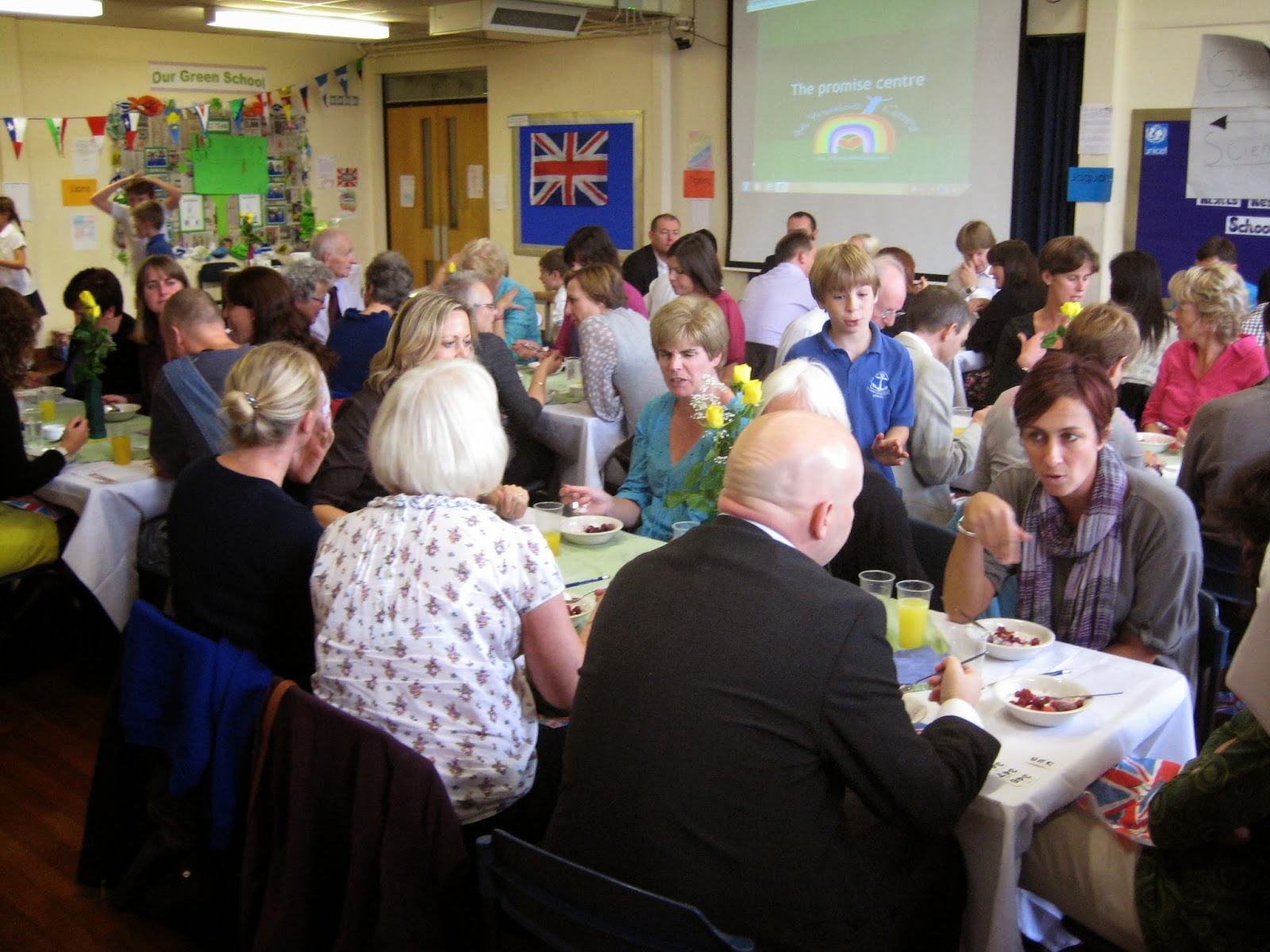
The book helped me out with the Keeping Healthy topic by suggesting putting on a paid-for dinner for parents to come along to, thus creating a REAL real-life enterprise project for the topic. The national curriculum required some dance in the year so, armed with a date for the meal and the go-ahead from the head, I proposed a Dinner & Dance project to my class. After a whole session of bouncing around suggestions of what we could do to make it successful and special, we had some amazing ideas. The children wanted to make it an international-themed, healthy dinner and dance.
From their ideas alone, I created an entire 6-week curriculum which covered many more subjects than I had originally hoped. They wanted to
"Because we NEED to."
Our learning had a point. A purpose. A REAL real-life scenario to drive it, whilst still being underpinned by the national curriculum. I was covering content but it didn't feel like it. The children were making progress but it wasn't the slog it could have been. They had a reason to make it their best work - their family and friends were coming along. Not only that but they were paying to come along! All that curriculum learning and "extra" learning - collaboration, communication, enterprise, etc - came about just because of a simple purpose. Something real to aim towards, together.
After the Dinner & Dance was a roaring success, with 50+ people attending and enjoying, £200 raised and newspaper reports printed in the local parish paper, I started having doubts. That idea had come from the book I'd read - what if it only worked for certain curriculum topics or subjects? Not being a defeatist, I set to preparing a "because we NEED to" curriculum for my most difficult topic: Ancient Greece. SO far in the past and so seemingly irrelevant to these children of the 21st century - how could it have a purpose? One thing was certain - I couldn't take them back in time to make it real!
This time, my inspiration came not from a book but from a child in my class. He had been to London for a stop-motion animation workshop and was so enthused when recounting the whole day to me. That's how I got the idea that the children could become Mythological Movie Makers. So, with a date for a cinema afternoon and the go-ahead from the head, I proposed a stop-motion project to my class. They would work in teams, becoming production companies complete with logos, taglines and jingles. They would choose, storyboard and script a Greek myth before filming it in stop-motion animation using Lego. They would then record the voice-over, edit the movie together and export it as a film ready for the cinema afternoon. Parents would be invited (at no charge) and the school would provide popcorn and fizzy drinks for the occasion.
It didn't really take much more than that to get the children excited and ready to learn. As a group, they read SO many Greek myths and debated about which one to use and why certain ones wouldn't work. There were times when they had to troubleshoot, diffuse arguments, take turns and compromise. Decisions were made about who had the skills for certain jobs and mistakes were quickly corrected to ensure perfection. The icing on the cake was when it came to "shooting" day and, unbeknown to me, each group had arranged to bring in lego, top-quality cameras, lighting and tri-pods to ensure they had the best pictures. Over 3,000 photos were taken that day and, whilst the classroom was a mess with children lying down everywhere and tables over turned with backdrops stuck on, the learning was plain to see to everyone who walked past. Despite a visit from the big "O" on the day of the cinema, all the movies were ready in time (just) and the afternoon was a success.
Later in the year, I had a glimpse into planning "because we NEED to" learning without any constraints from the curriculum or the powers that be. You can read about that week, my favourite in teaching, here. To read more about the Dinner & Dance project, see here and to see some photos of the Mythological Movie Makers project see here.
To finish, here are some important things to remember when creating "because we NEED to" learning:
"Because we HAVE to."
That was before I read the book Inspirational Teachers, Inspirational Learners over the summer. There was a brand new school year beckoning and I was desperate for ways to improve my practice for my second year of teaching. I was determined to make it an "inspirational" year for the kids and me. There were two main points I took away from the book. Firstly, that learning can be greatly enhanced with REAL real-life scenarios and projects. Secondly, that enterprise can help to create a true purpose for learning, whilst giving children important life skills. I finished the book completely inspired to drop the pretense and the make believe to make way for real purpose-driven learning in my classroom.
Then I came across the first hurdle: the National Curriculum. How on Earth could I make Keeping Healthy and Ancient Greece have a REAL real-life purpose? The latter seemed particularly difficult because of the distance in time between the my class and the era they would be learning about.
The book helped me out with the Keeping Healthy topic by suggesting putting on a paid-for dinner for parents to come along to, thus creating a REAL real-life enterprise project for the topic. The national curriculum required some dance in the year so, armed with a date for the meal and the go-ahead from the head, I proposed a Dinner & Dance project to my class. After a whole session of bouncing around suggestions of what we could do to make it successful and special, we had some amazing ideas. The children wanted to make it an international-themed, healthy dinner and dance.
From their ideas alone, I created an entire 6-week curriculum which covered many more subjects than I had originally hoped. They wanted to
- make bunting of the flags of the world (DT).
- research a country each (ICT, Geography).
- make posters to go up about the countries (English).
- advertise the event so designed posters for the school and radio adverts for the blog (ICT).
- learn dances from around the world (PE, Geography).
- find out how to make the meal healthy and where the healthy foods came from (Science, ICT).
- write to a local hotel and a chef to see if they could help (English).
"Because we NEED to."
Our learning had a point. A purpose. A REAL real-life scenario to drive it, whilst still being underpinned by the national curriculum. I was covering content but it didn't feel like it. The children were making progress but it wasn't the slog it could have been. They had a reason to make it their best work - their family and friends were coming along. Not only that but they were paying to come along! All that curriculum learning and "extra" learning - collaboration, communication, enterprise, etc - came about just because of a simple purpose. Something real to aim towards, together.
After the Dinner & Dance was a roaring success, with 50+ people attending and enjoying, £200 raised and newspaper reports printed in the local parish paper, I started having doubts. That idea had come from the book I'd read - what if it only worked for certain curriculum topics or subjects? Not being a defeatist, I set to preparing a "because we NEED to" curriculum for my most difficult topic: Ancient Greece. SO far in the past and so seemingly irrelevant to these children of the 21st century - how could it have a purpose? One thing was certain - I couldn't take them back in time to make it real!
This time, my inspiration came not from a book but from a child in my class. He had been to London for a stop-motion animation workshop and was so enthused when recounting the whole day to me. That's how I got the idea that the children could become Mythological Movie Makers. So, with a date for a cinema afternoon and the go-ahead from the head, I proposed a stop-motion project to my class. They would work in teams, becoming production companies complete with logos, taglines and jingles. They would choose, storyboard and script a Greek myth before filming it in stop-motion animation using Lego. They would then record the voice-over, edit the movie together and export it as a film ready for the cinema afternoon. Parents would be invited (at no charge) and the school would provide popcorn and fizzy drinks for the occasion.
It didn't really take much more than that to get the children excited and ready to learn. As a group, they read SO many Greek myths and debated about which one to use and why certain ones wouldn't work. There were times when they had to troubleshoot, diffuse arguments, take turns and compromise. Decisions were made about who had the skills for certain jobs and mistakes were quickly corrected to ensure perfection. The icing on the cake was when it came to "shooting" day and, unbeknown to me, each group had arranged to bring in lego, top-quality cameras, lighting and tri-pods to ensure they had the best pictures. Over 3,000 photos were taken that day and, whilst the classroom was a mess with children lying down everywhere and tables over turned with backdrops stuck on, the learning was plain to see to everyone who walked past. Despite a visit from the big "O" on the day of the cinema, all the movies were ready in time (just) and the afternoon was a success.
Later in the year, I had a glimpse into planning "because we NEED to" learning without any constraints from the curriculum or the powers that be. You can read about that week, my favourite in teaching, here. To read more about the Dinner & Dance project, see here and to see some photos of the Mythological Movie Makers project see here.
To finish, here are some important things to remember when creating "because we NEED to" learning:
- Use parents, family and friends - they are a brilliant, free resource! They will often do anything for their children and even part with a small amount of cash to help with enterprise topics. Make sure you give them a lot of notice of any events as they are also busy people.
- If you have a class/year blog - use it. If you don't have a class/year blog - get one! It's the best way of reaching lots of people. Lots of people = lots of purpose. It also means if you've invited people in, they can be updated with the progress and serves as a place for questions, information and advertising!
- Keep it simple - come up with a basic outline of what you want the children to achieve then go straight to the kids. Their ideas will always be better and more suited to their interests than your ideas!
- Don't force it - like with cross-curricular links, the power of the learning can be lost if the links are more like a spider's web! Only do something if it feels natural and possible and, if the kids hate the idea, abandon it and use one of theirs!
- Give the children power, choice and responsibility - they need to own the project. If it's teacher-driven, it can be as contrived as if it were make believe. If they want to do something that you don't have the time for, say "yes" but delegate it to them! (A child wanted to run a raffle at the Dinner & Dance. I said "yes - you organise it". I didn't hear anything from them for the whole 6 weeks but on the day they turned up with prizes and tickets and made an extra £30!)
A photo from the Dinner & Dance
Subscribe to:
Posts (Atom)